Überarbeitet 18.05.2026
Revised May 18, 2026
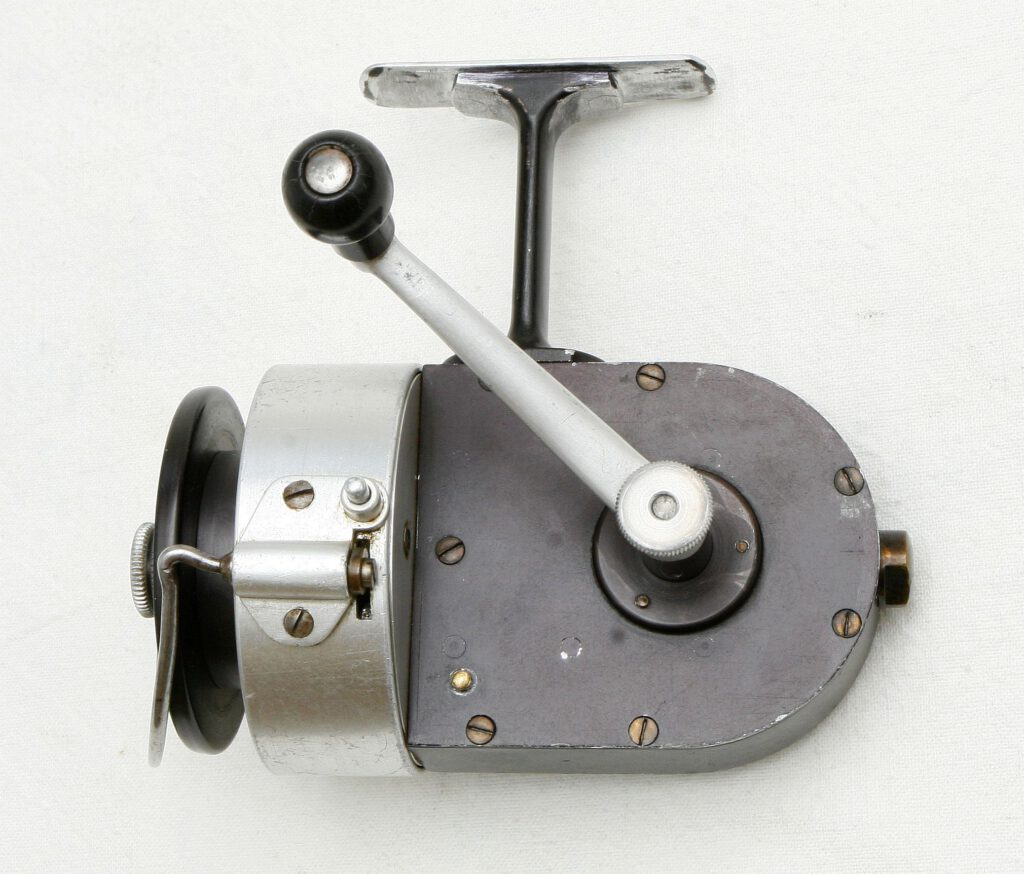
DAM Quick ca. 1936 oder 37 ? Es handelt sich wahrscheinlich um einen Prototyp oder um eine Null Serien Rolle? Diese Rolle wirft einige interessante Fragen auf, sollte jemand eine ähnliche Rolle haben oder hat schon mal eine Ähnliche gesehen? Oder kann eine der Fragen beantworten so würde es mich freuen, wenn er sich mit mir in Verbindung setzt! Diese Rolle gehört einem bekannten Sammler, dieser hat sie mir zur Verfügung gestellt und möchte nicht genannt werden!
DAM Quick, circa 1936 or 37? It is likely a prototype or a pre-production model. This reel raises some interesting questions, if anyone owns a similar reel—or has ever seen one like it—or can answer any of these questions, I would be delighted if they would get in touch with me. This reel belongs to a well-known collector who made it available to me but wishes to remain anonymous.
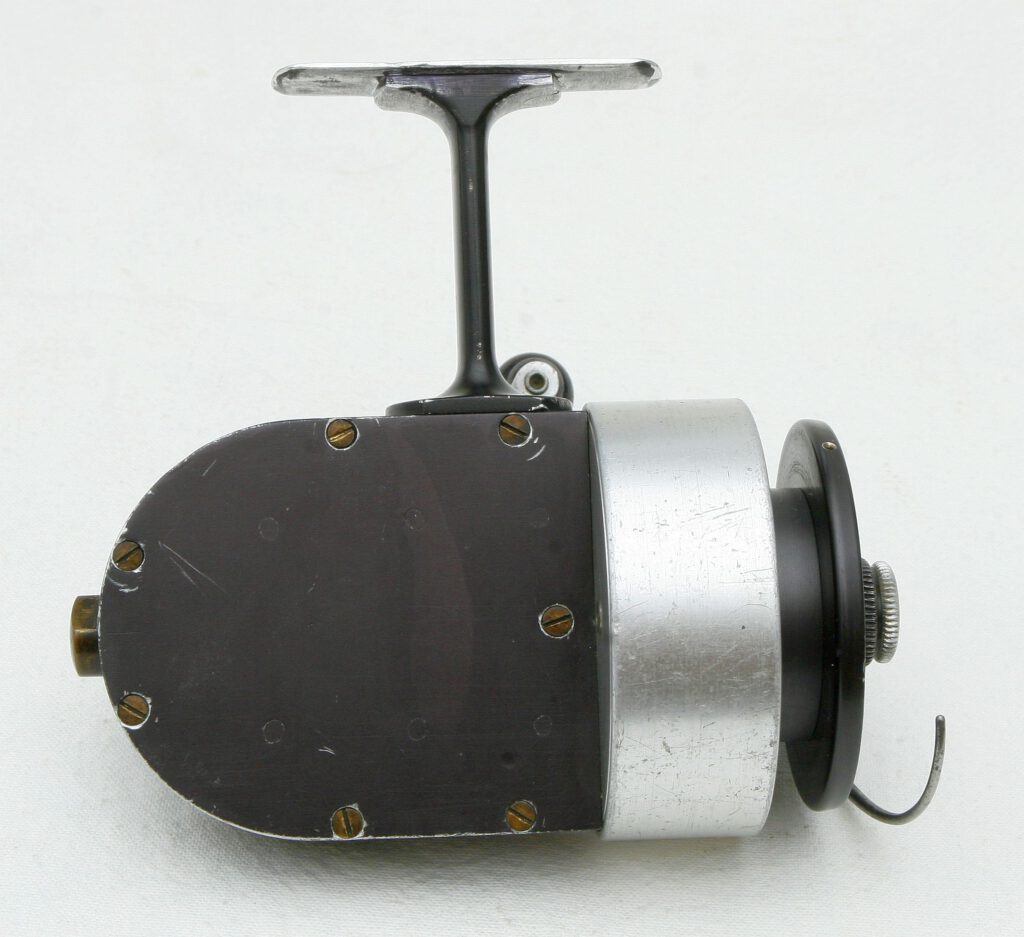
Alle Einzelteile wurden aus dem Vollen gefertigt! Mit Hilfe von Dreh Fräs und Bohrmaschinen! Es sind keine Gussteile an dieser Rolle verwendet worden! Das spricht natürlich alles für einen Prototyp!
All individual components were machined from solid stock—using lathes, milling machines, and drill presses! No cast parts were used in this reel! Naturally, all of this points to it being a prototype.
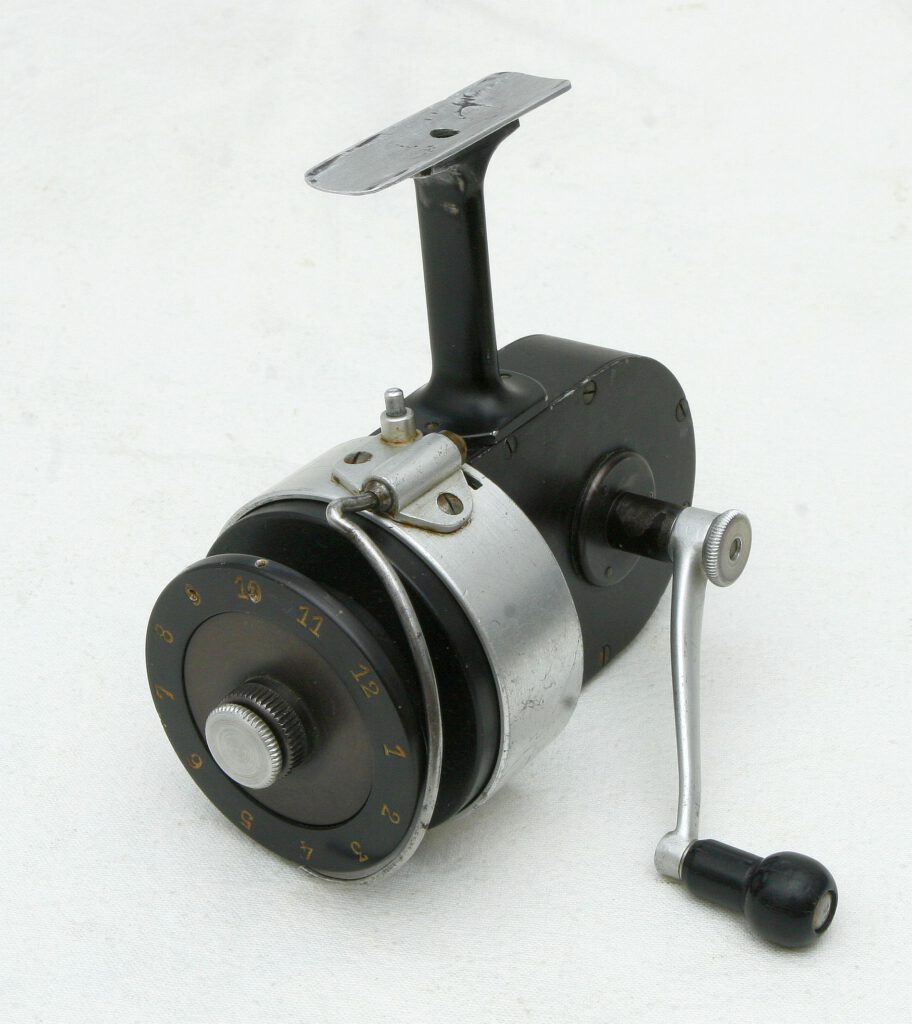
Der Halbbügelmechanismus ist so ähnlich wie bei der dritten Version der Halbbügel, auch hier wurden keine zusätzlichen Passstifte verwendet, aber bei der ersten und zweiten Serie, war dieses der Fall!
The half-bail mechanism is similar to that of the third version of the half-bails, here too, no additional dowel pins were used, though this was the case with the first and second series!
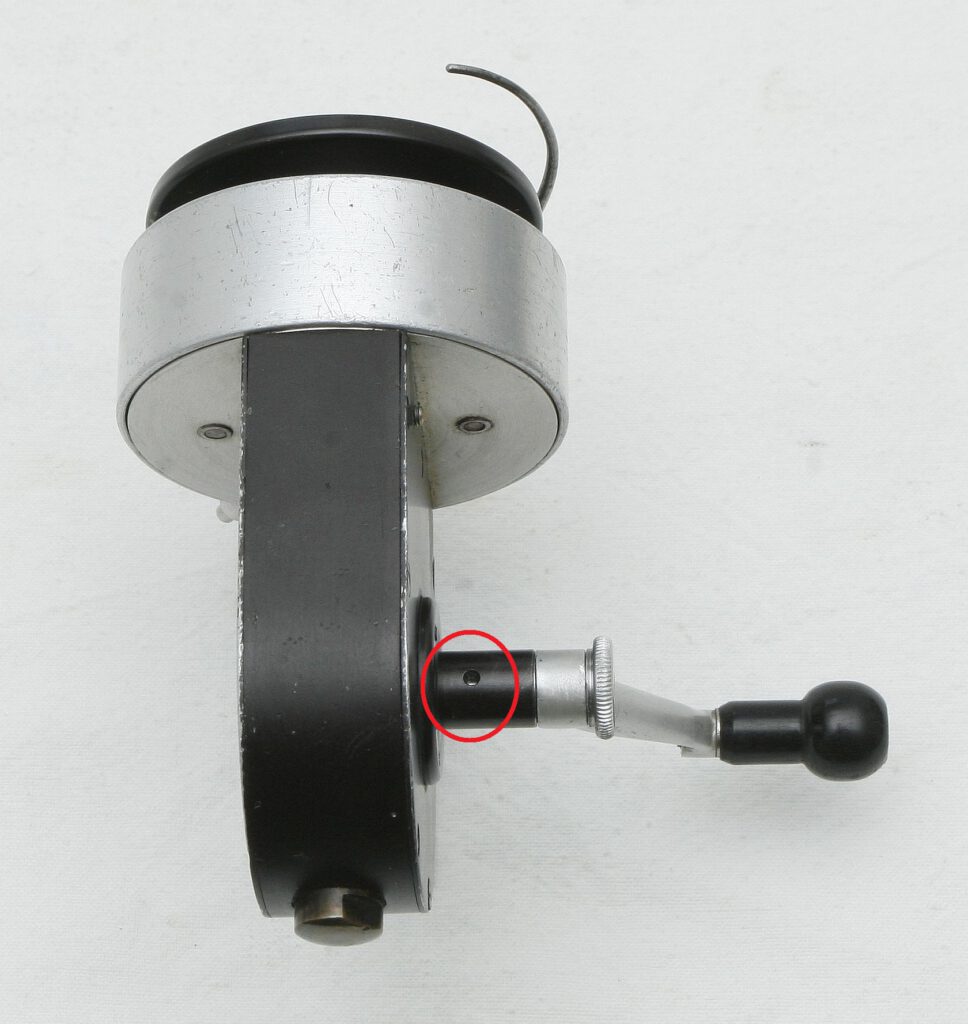
Warum ist die Ölbohrung in dem Gehäuse für die Kurbelachse von unten? Man kann das Lagergehäuse nicht drehen, da es nur 3 versetze Bohrungen hat! Der rechte und der linke Seitendeckel könnte getauscht werden, dann ist die Ölbohrung oben, aber die Kurbel ist auf der anderen Seite? Sollte sie vielleicht für einen Linkshänder sein?
Why is the oil hole in the crank axle housing located at the bottom? The bearing housing cannot be rotated, as it features only three offset holes! The right and left side covers could be swapped, in which case the oil hole would be at the top, but then the crank would be on the other side? Could it perhaps be for a left-hander?
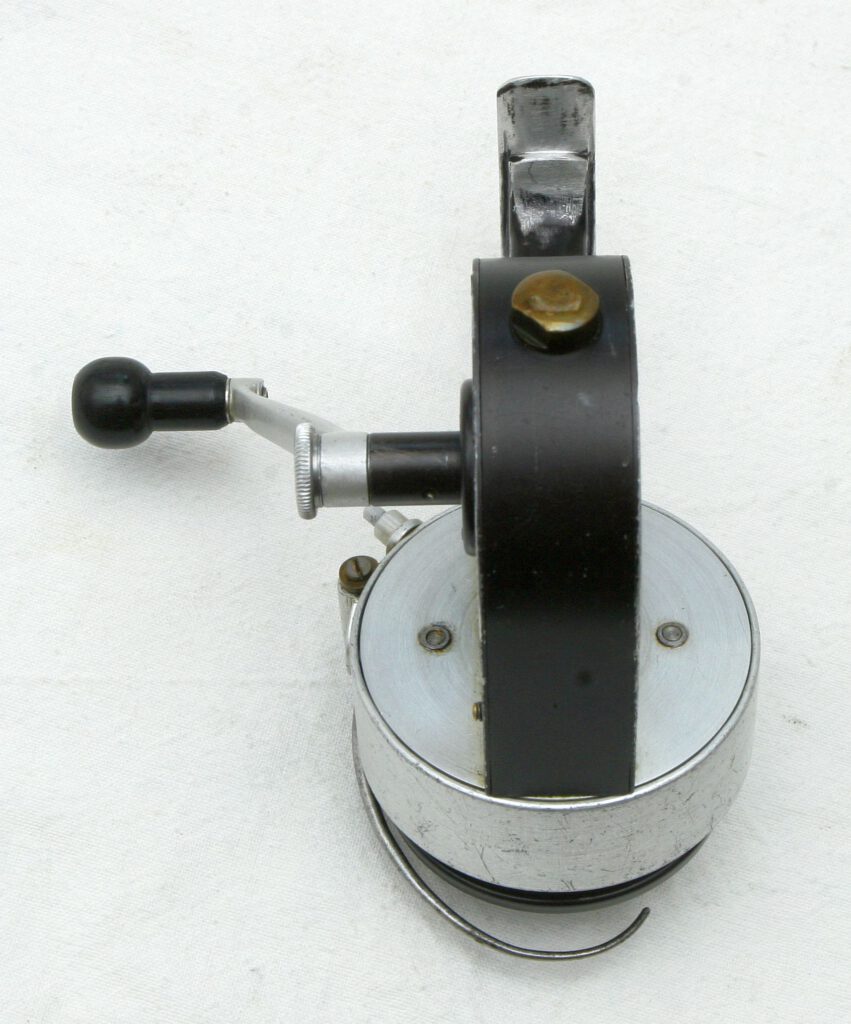
Hier sieht man 2 geschraubte Auslösehebel für den Bügel, bei der Serie später waren sie erstmal genietet, was für verschiedene Probleme gesorgt hat!
Here, you can see two screwed release levers for the bail, in the later production series, they were initially riveted, a design choice that gave rise to various problems!
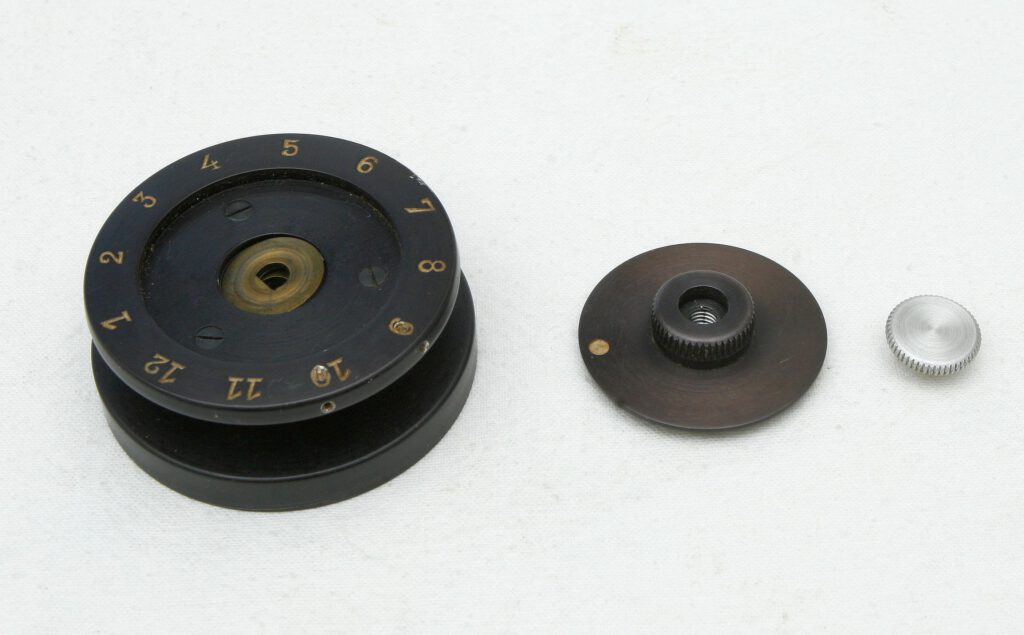
Spule Bremsmutter und Kontermutter sind aus Alu gefertigt! Die Spule ist geteilt wie es später ab ca.1954 auch bei der Serie war! Die Uhrenziffern wurden auf dem Teilkopf einzeln eingraviert! Interessant sind auch die kleinen Bohrungen in der Spule, in die man die Schnur stecken konnte damit sie nicht abspringt, ähnlich wie es viel später an der 1000er Serie teilweise auch war!
The spool, drag nut, and locknut are crafted from aluminum. The spool features a split design, a characteristic that would later become standard for the production series starting around 1954. The clock-face numerals were individually engraved using a dividing head. Also of interest are the small holes in the spool, into which the fishing line could be tucked to prevent it from slipping off—a feature similar to one that would appear much later on certain models of the DAM Quick 1000 series.
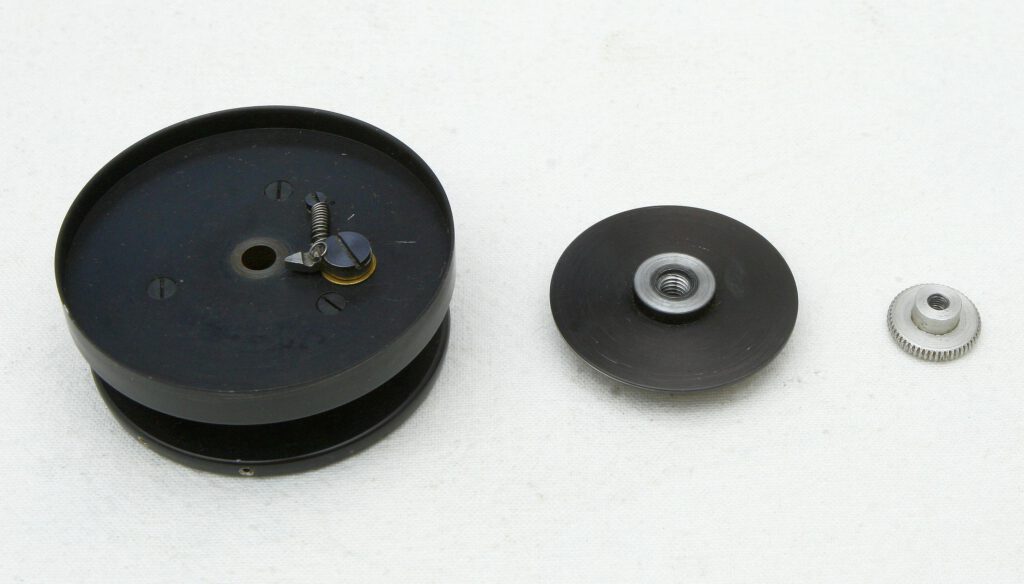
Auch hier erkennt man, das ein Feinmechaniker, die Einzelteile in geringer Stückzahl hergestellt hat.
Here, too, one can see that a precision mechanic produced the individual parts in small quantities.
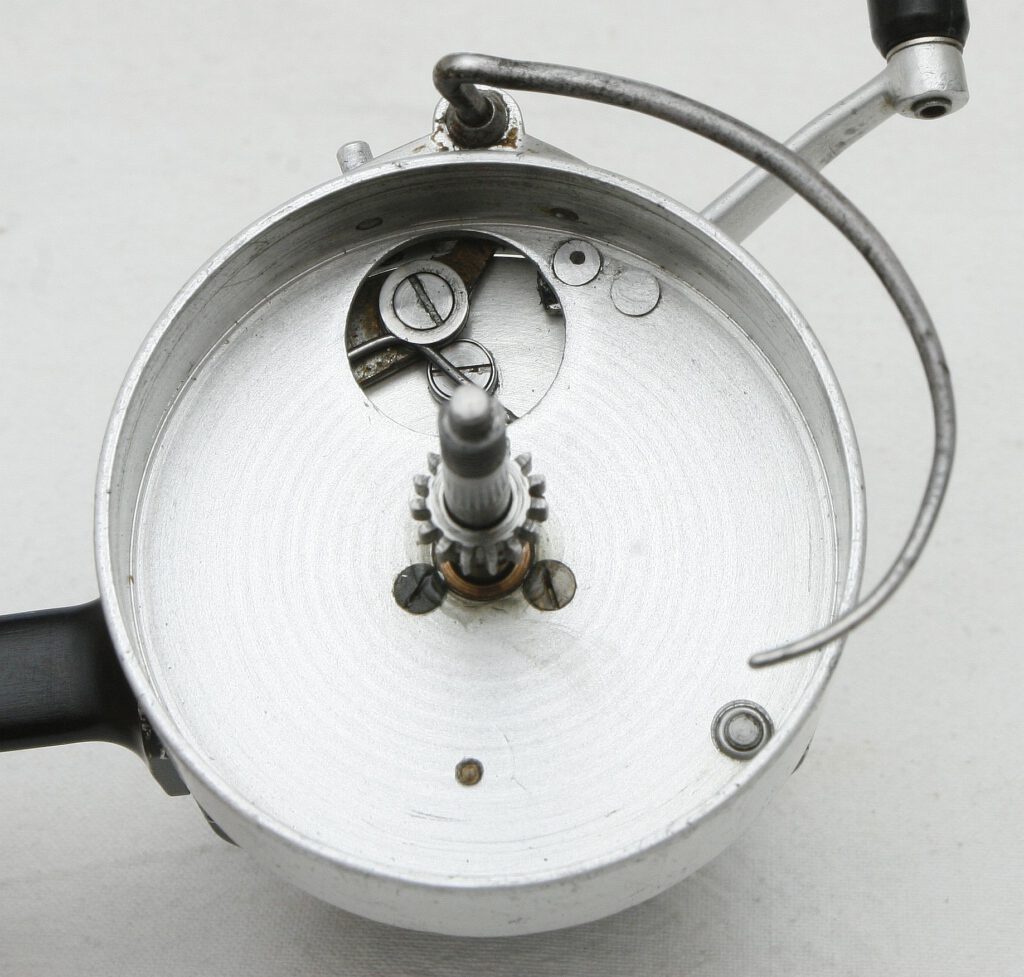
Rotor und Bügelmechanismus sind sehr ähnlich wie es später in der zweiten und dritten Serie der Halbbügel Quick, dann auch der Fall war ! Die erste Serie war ganz ohne Durchbruch!
The rotor and bail mechanism are very similar to how they later appeared in the second and third series of the „half-bail“ Quick reels, a design that was entirely absent from the first series!
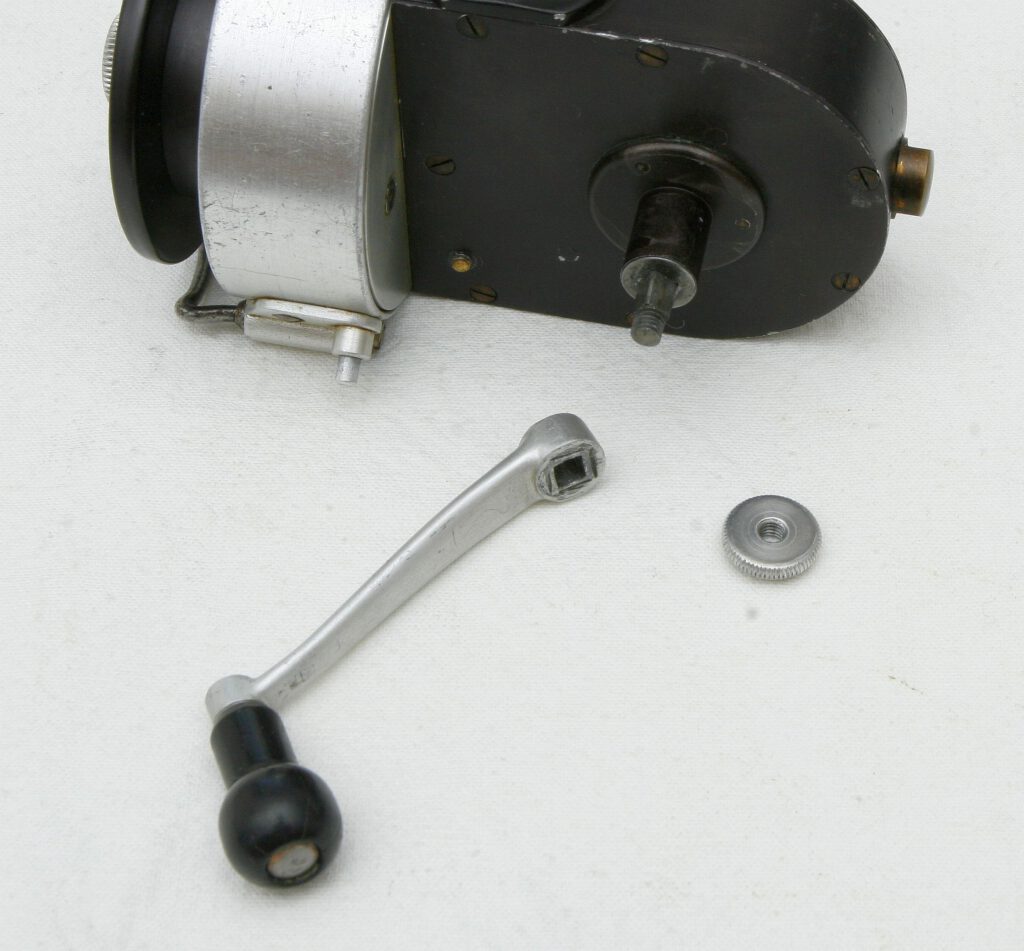
Die Kurbel usw. ist schon sehr ähnlich wie später in der Serie!
The crank, etc., is actually very similar to how it appears later in the series!
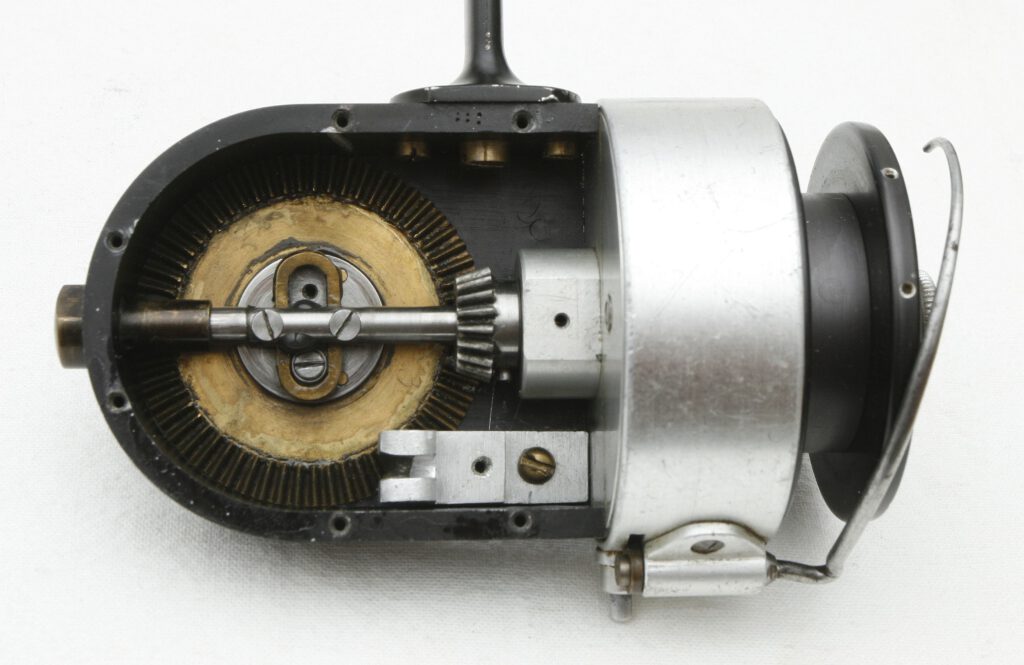
Auch hier erkennt man, das die Getriebeteile sehr ähnlich sind wie bei der zweiten und dritten Serie, der Halbbügel Modelle und alles geschraubt und nicht vernietet war! Allerdings gibt es eine Abweichung, der Innenteil des Antriebsrades ist aus Stahl, normalerweise war das Zahnrad komplett aus Messing! Aber bei einigen sehr stark gebrauchten Modellen, ist der Mitnehmer in das Zahnrad bis zu einem Millimeter tief eingelaufen! Vielleicht wurde das berücksichtigt, oder es war schon eine Reparatur?
Here, too, one can observe that the transmission components are very similar to those of the second and third series, the „half-bail“ models, and that everything was screwed together rather than riveted. However, there is one deviation: the inner section of the drive wheel is made of steel, whereas typically the gear was made entirely of brass. Yet, in some heavily used models, the drive lug has worn into the gear to a depth of up to one millimeter. Perhaps this design change was implemented to address that issue, or could it simply be a repair?
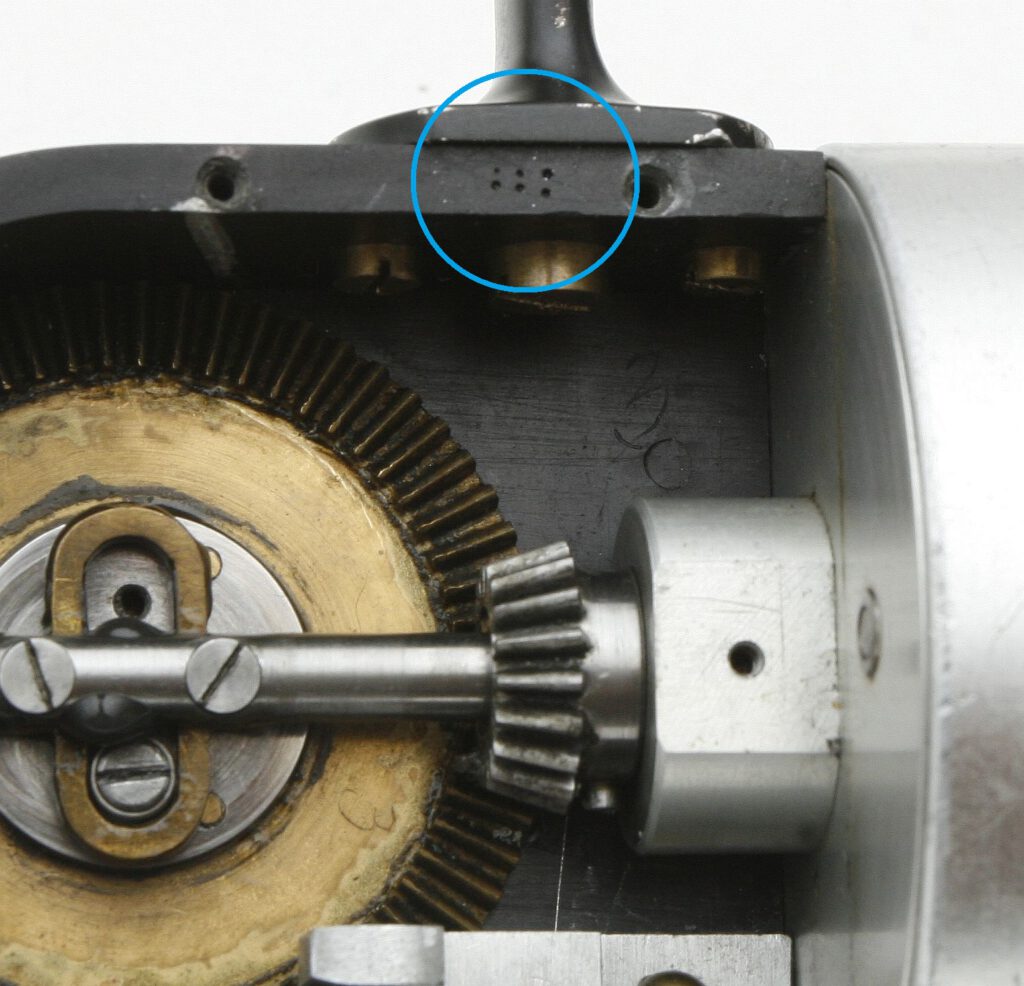
Hier erkennt man die Markierungen für die Zugehörigkeit von Rahmen und Seitenteilen! Durch 6 Körnerschläge! Das bedeutet, das es sich wahrscheinlich um eine Kleinserie gehandelt hat!
Here, one can identify the markings indicating the matching of the frame and side panels, specifically six punch marks! This suggests that this was likely a small-batch production run.
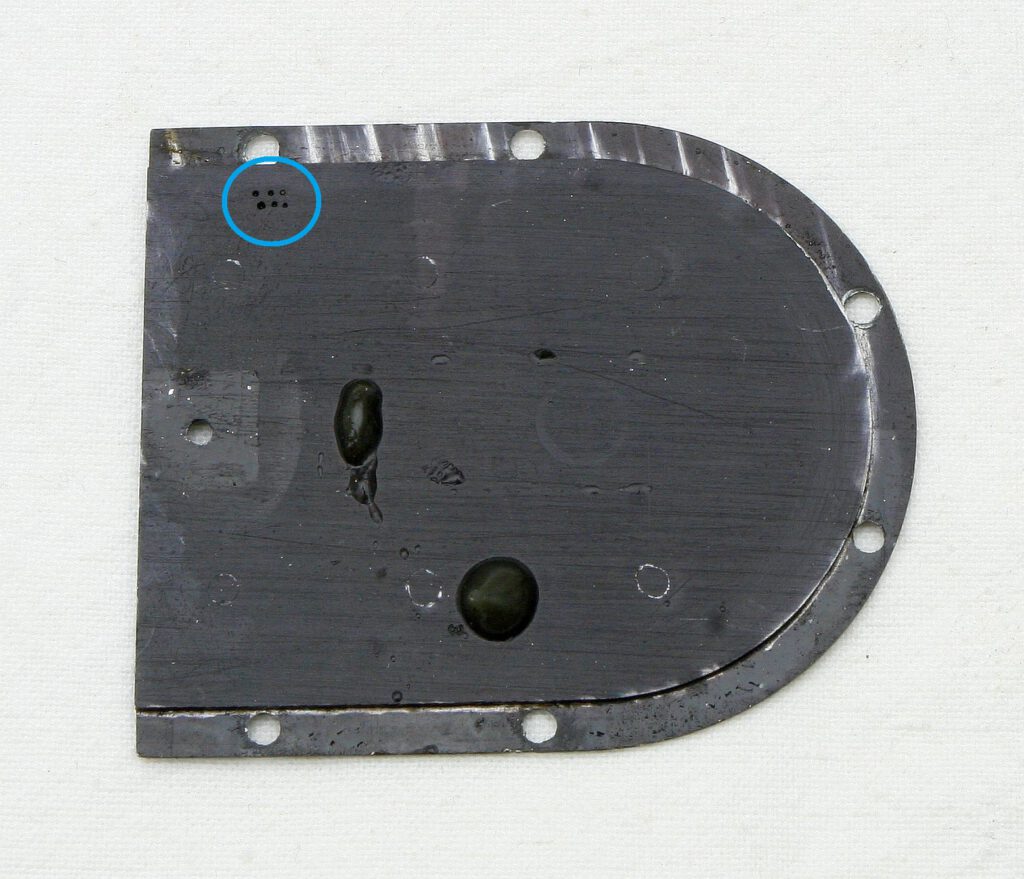
Auch im Deckel wieder die selbe Markierung.
The same marking appears in the side cover as well.
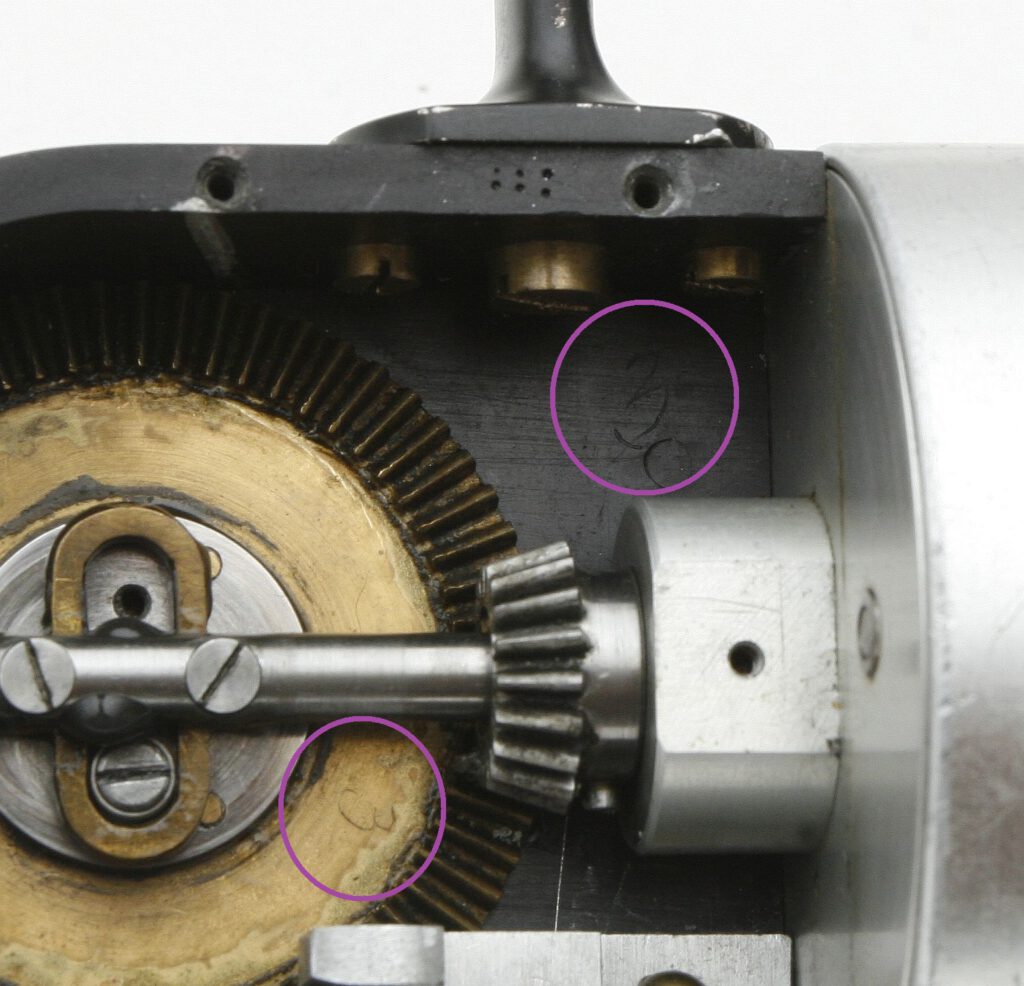
Hier erkennt man die Markierungen des Gehäuses und der Getriebeteile, welches den Schluss zulässt das es sich um eine Vorserie oder Nullserie handeln muss, da diese Teile mit einer 3 markiert sind! Eine ähnliche Markierung, wurde später auch bei den Neulac Rollen, aus Dresden verwendet!
Here, one can discern the markings on the housing and the gear components—markings that lead to the conclusion that this must be a pre-series or pilot-series unit, as these parts are marked with the number 3! A similar marking system was later also employed on the Neulac reels manufactured in Dresden.

Welche Funktion hat das Bauteil im Gehäuse unten rechts? Möglicherweise eine nicht fertig gestellte Rücklaufsperre? Was anderes kann es eigentlich nicht sein oder?
What is the function of the component in the bottom right of the housing? Could it possibly be an unfinished anti-reverse mechanism? It really couldn’t be anything else, could it?
Für jeden Tipp oder Information über diese Rolle wäre ich sehr Dankbar?
Petri Heil und viele Grüße Uwe Wenzel
I would be very grateful for any tips or information regarding this reel?
Tight lines and best regards, Uwe Wenzel.