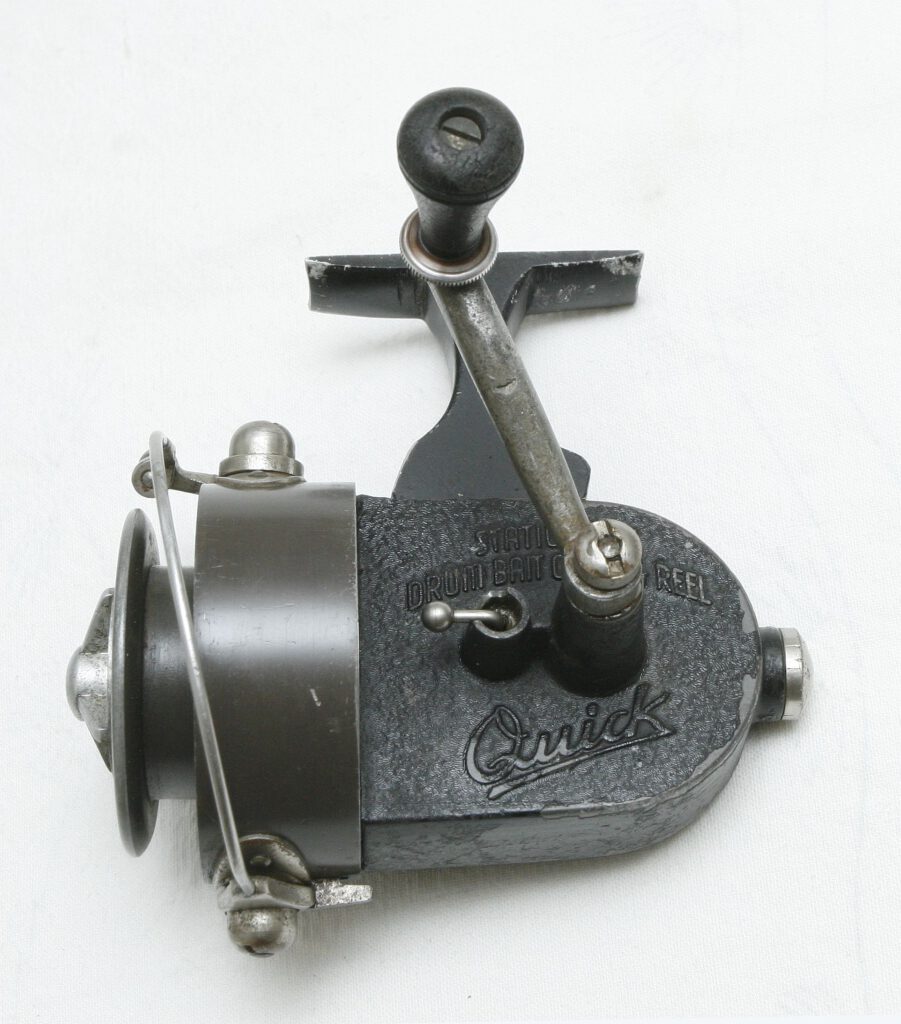
Modell 50/51
ohne Serien Nr.
Artikel Nr. 153
lange Sperrklinke, Auslöser im Rotorblech einstellbar
Auslöser im Rotorblech genietet, Gehäuse eloxiert
Eigenbau Fuß und Kurbelarm
Model 50/51
No serial number
Item No. 153
Long pawl, trigger adjustable within the rotor plate
Trigger riveted into the rotor plate, housing anodized.
Custom-fabricated base and crank arm.
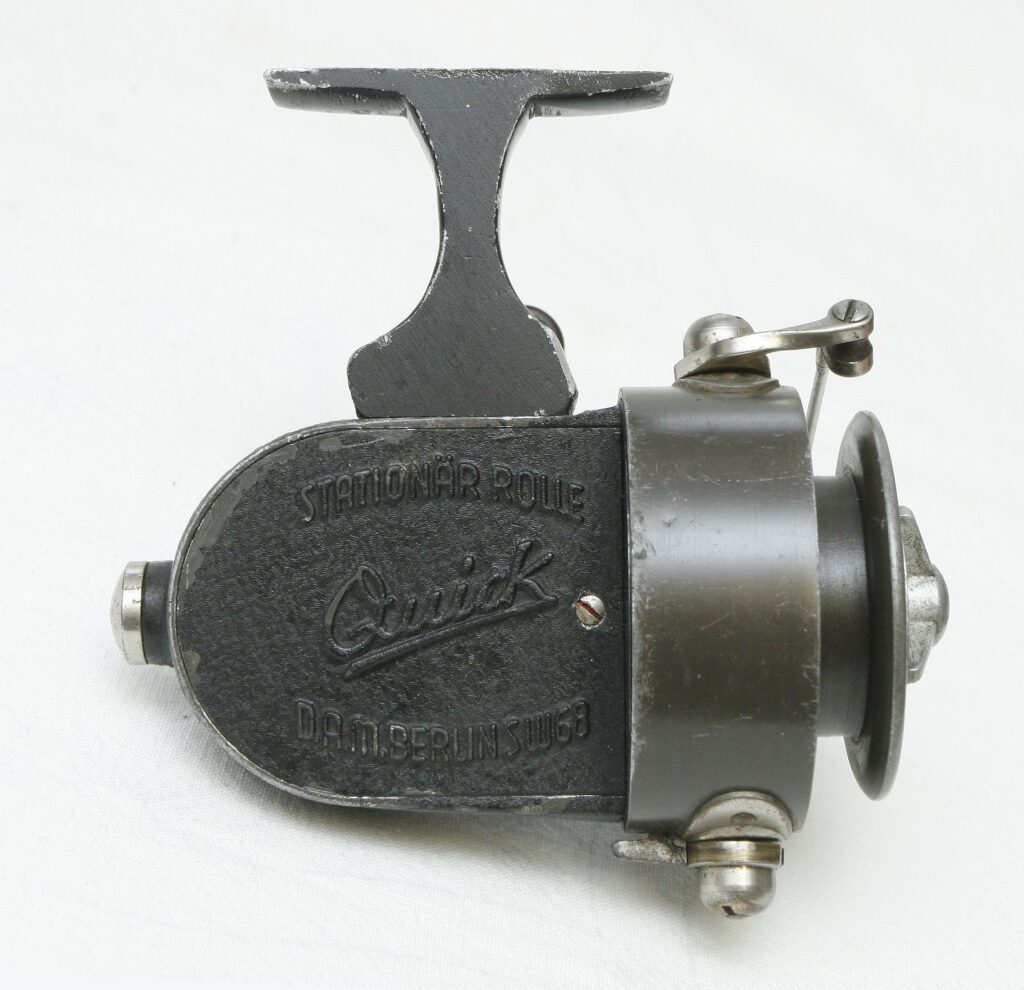
Hier sticht natürlich der rustikale Eigenbaufuß sofort ins Auge! Spule mit unsymmetrischer Ablaufkante!
Here, of course, the rustic, homemade stand immediately catches the eye! A spool with an asymmetrical payout edge!
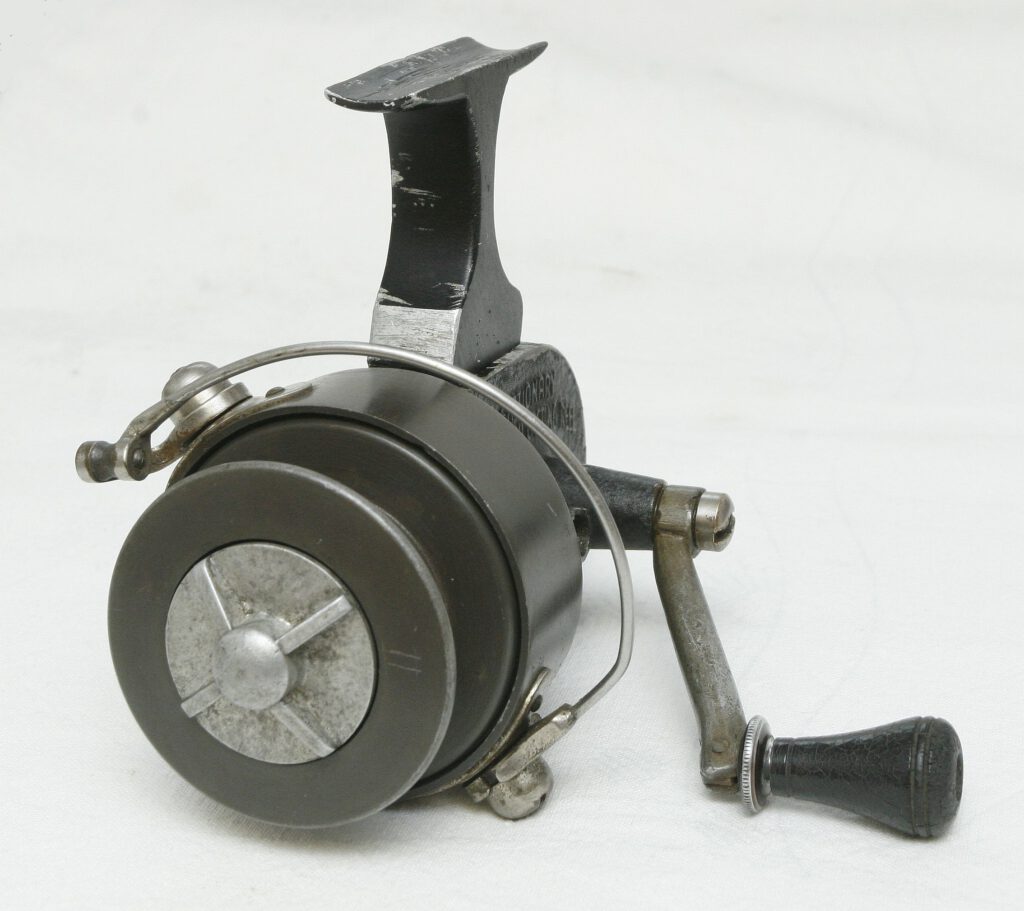
Hier sieht man deutlich, der Kurbelarm ist auch irgendwie anderst? Auch hier handelt es sich um einen rustikalen Eigenbau.
Here, you can clearly see that the crank arm is also, somehow different? This, too, is a rustic homemade creation.
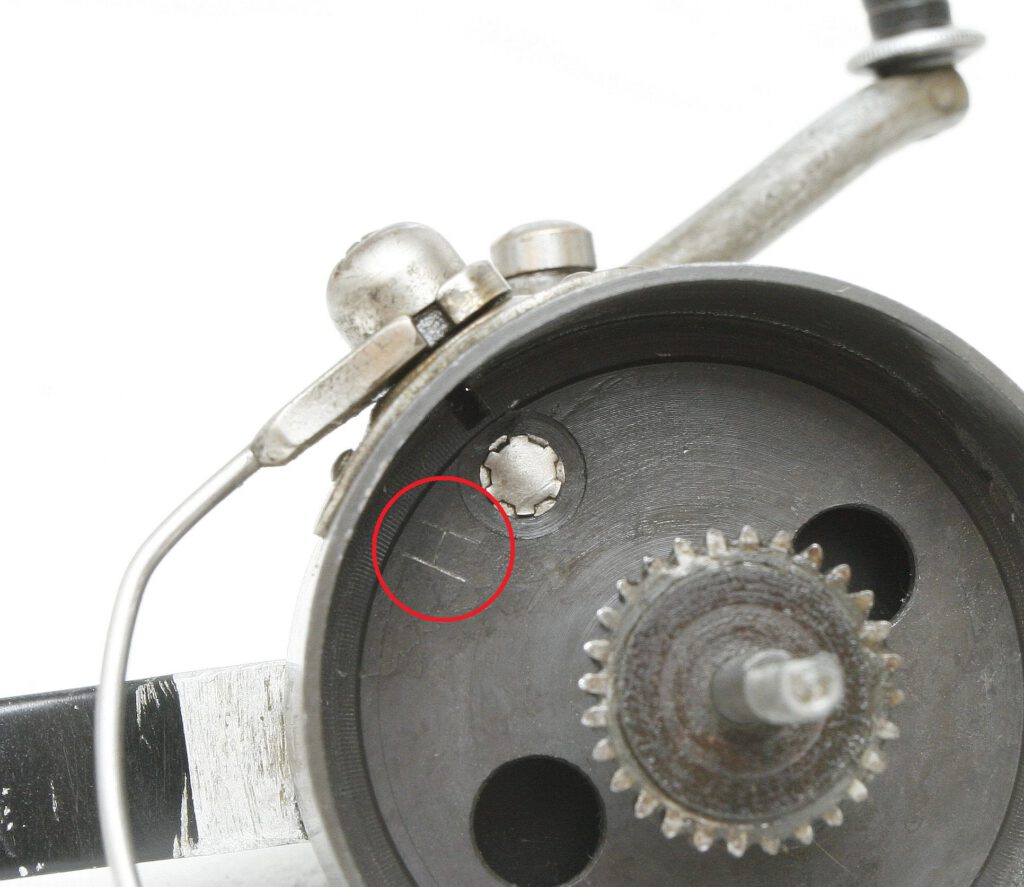
Hier hat jemand ein H, für seinen Namen Herrmann eingekratzt! Interessanter Weise habe ich noch einige weitere Standards, wo auch an dieser Stelle, ein Buchstabe eingekratzt wurde! Es ist auf jeden Fall die gleiche Art und Weise! Da alle diese Rollen aus verschieden Quellen stammen, kann das nur bedeuten, das es im Werk gemacht wurde! Alle Rollen stammen aus der selben Losgruppe von Mitte 50 bis Anfang 51! Das haben wohl die Arbeiter im Werk gemacht, damit man nachvollziehen konnte wer an welchen Rollen gearbeitet hat, da es noch keine Seriennr. gab!
Someone has scratched an „H“ here—presumably for the name Herrmann! Interestingly enough, I have several other *Standards* where a letter has been scratched into this very same spot! The style is, without a doubt, identical in every case. Since all these rolls originate from different sources, this can only mean that the markings were made right there at the factory! All the rolls belong to the same production batch, dating from mid-1950 to early 1951. It seems the factory workers did this so that it would be possible to trace who had worked on which specific rolls, given that serial numbers did not yet exist at the time!
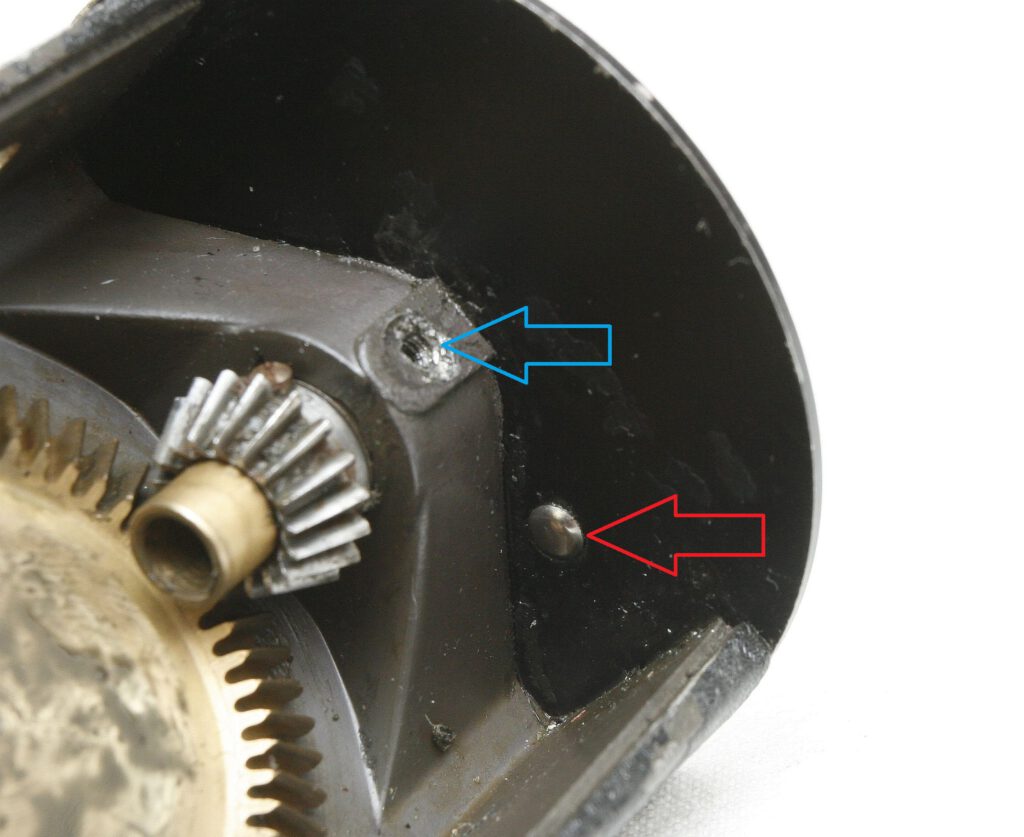
Roter Pfeil eingenieteter Schaltstift für Bügel (selten nur bis Ende 1950). Blauer Pfeil, deutlich zu sehen hier hat mal wieder jemand, die Deckelschraube schräg rein gewürgt! Schraube hält aber noch auf den letzten 1,5 Gängen!
Red arrow: riveted shift pin for the bail (rare—found only up until the end of 1950). Blue arrow: clearly visible here, once again, someone has forced the cover screw in crookedly! However, the screw is still holding on by its last 1.5 threads!
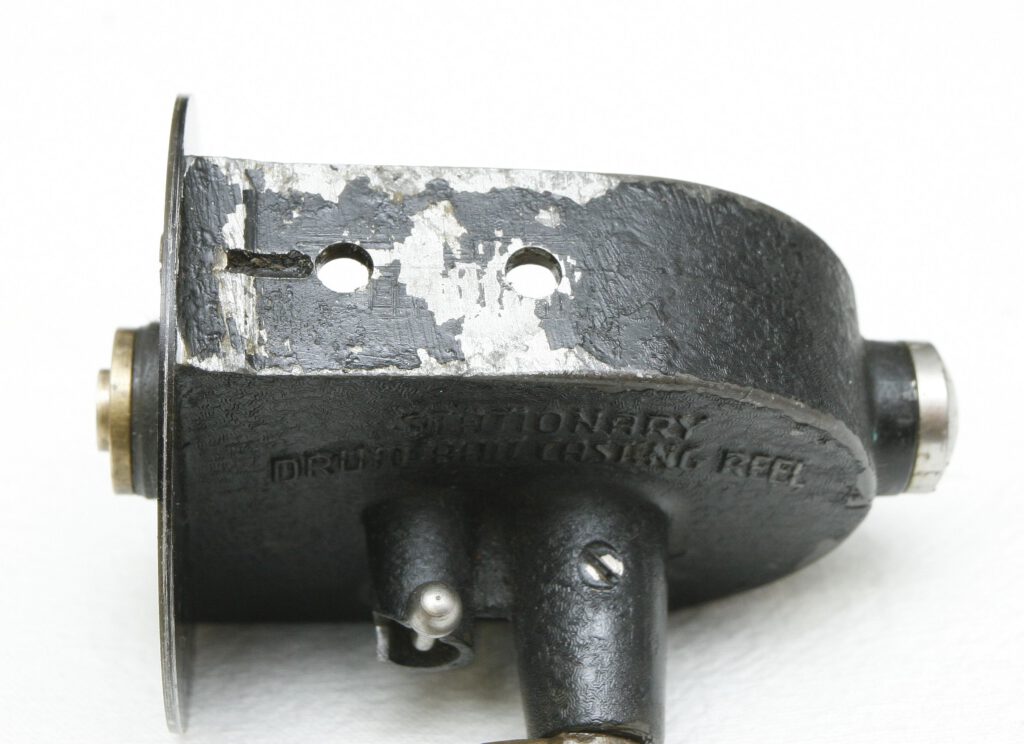
Hier sieht man, die Reste vom Fuß wurden grob ab gefeilt, anschließend gebohrt und neu lackiert!
Here you can see that the remnants of the base were roughly filed away, then drilled and repainted!
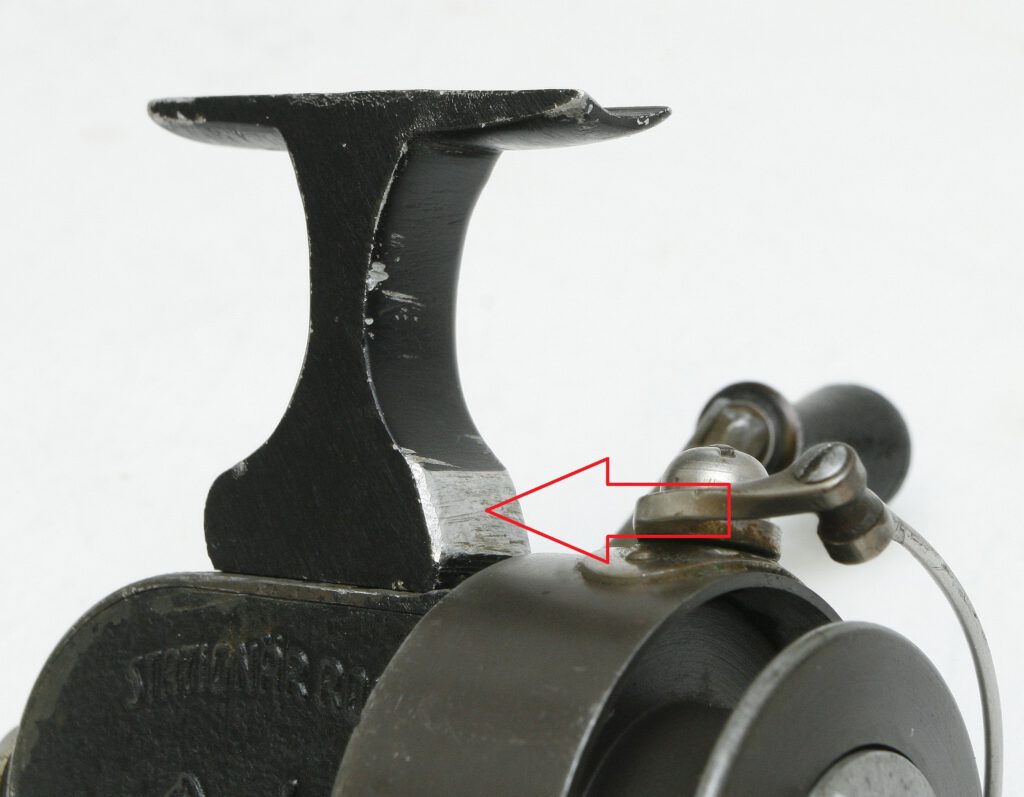
Hier sieht man der Fuß wurde symmetrisch grob aus einer 15mm dicken Aluminium Platte heraus gesägt, gefeilt und lackiert! Bei der Montage wurde dann festgestellt, der Rotor ist im Weg! Darauf hin wurde kurzerhand ein Stück ab gesägt, anschließend wurde der Fuß montiert aber die Stelle wurde nicht nachlackiert! Möglicherweise hatte den Fuß jemand anderer hergestellt, nach Skizze oder Gefühl?
Here, one can see that the foot was roughly and symmetrically cut from a 15mm-thick aluminum plate, filed, and painted. During assembly, however, it was discovered that the rotor was in the way! Consequently, a section was unceremoniously sawed off, the foot was then mounted, but the cut area was not repainted. Perhaps someone else had fabricated the foot, working from a sketch, or simply by feel?
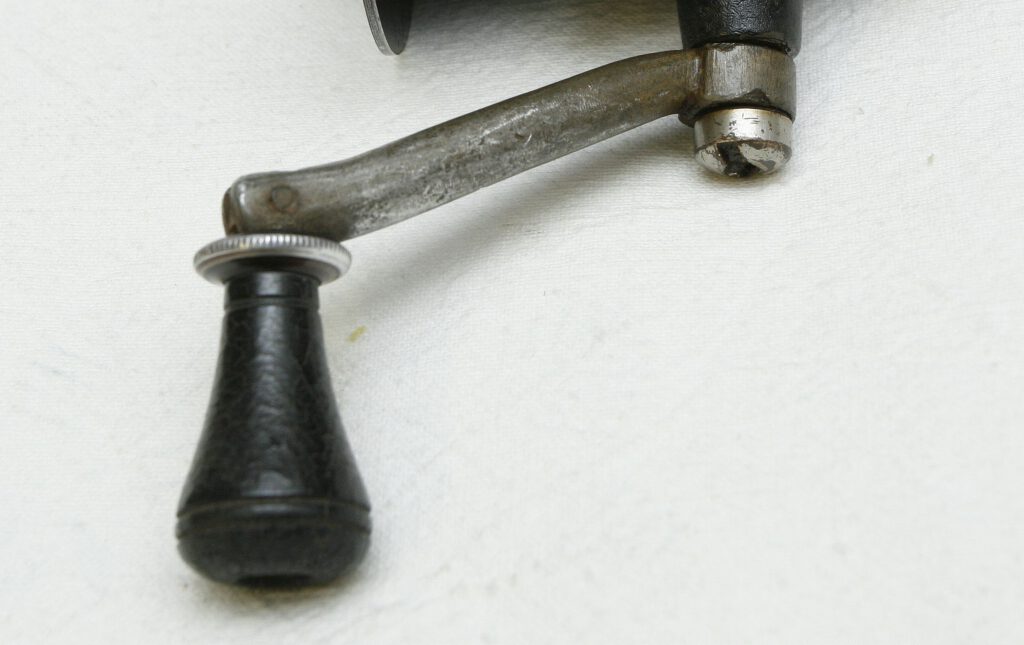
Der Kurbelarm wurde aus dem Vollen gefeilt und anschließend passend gebogen!
The crank arm was filed from solid stock and subsequently bent to fit!
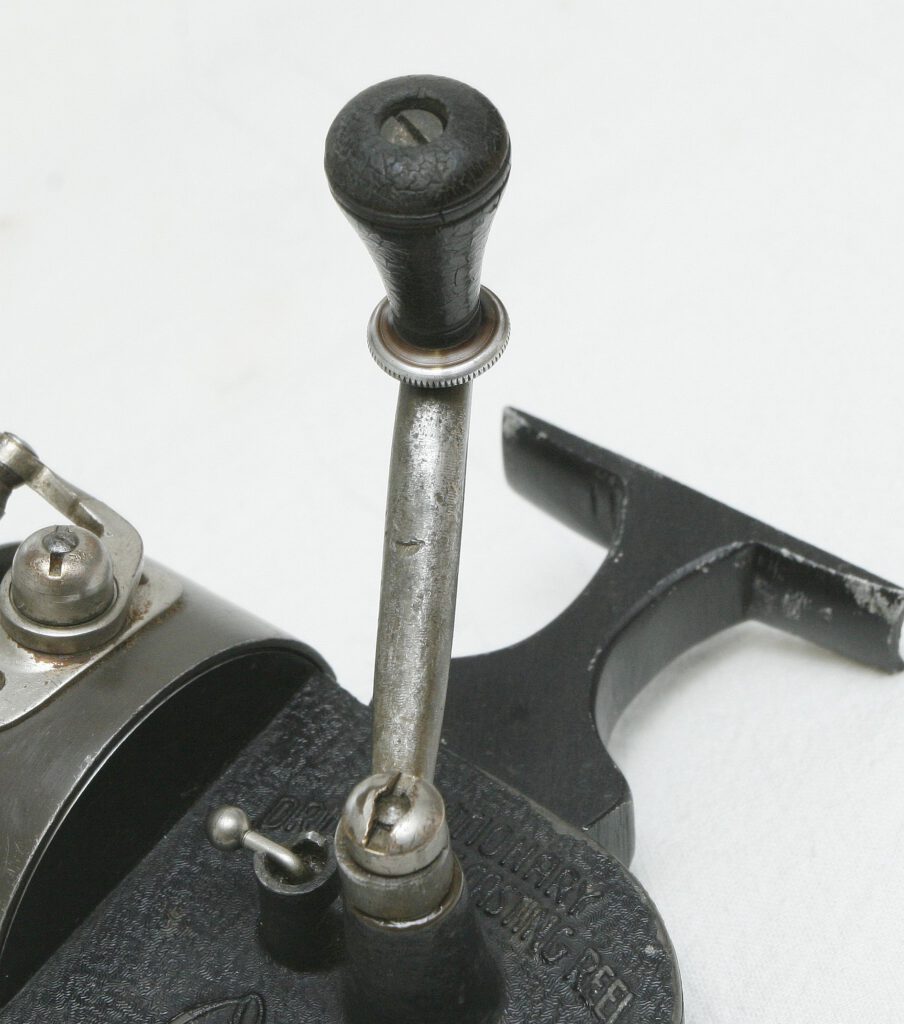
Hier kann man erkennen, als der Arm grob fertig war hat den Mechaniker, die Lust oder die Zeit verlassen, der Arm wurde nicht mehr, in eine parallele symmetrische Form gebracht! Ein Riesen Aufwand, war es bestimmt trotzdem, es hat ca.1,5 bis 2 Stunden gedauert! Aber die Rolle funktioniert heute immer noch sehr gut, trotz der rustikalen Instandsetzungen!
Here, one can see that once the arm was roughly finished, the mechanic either lost the inclination or ran out of time—the arm was never brought into a parallel, symmetrical shape! It must have been a massive undertaking nonetheless; it took approximately 1.5 to 2 hours! Yet, the reel still functions very well today, despite these rustic repairs!