The gentle opening of the side cover of the Quick Standard
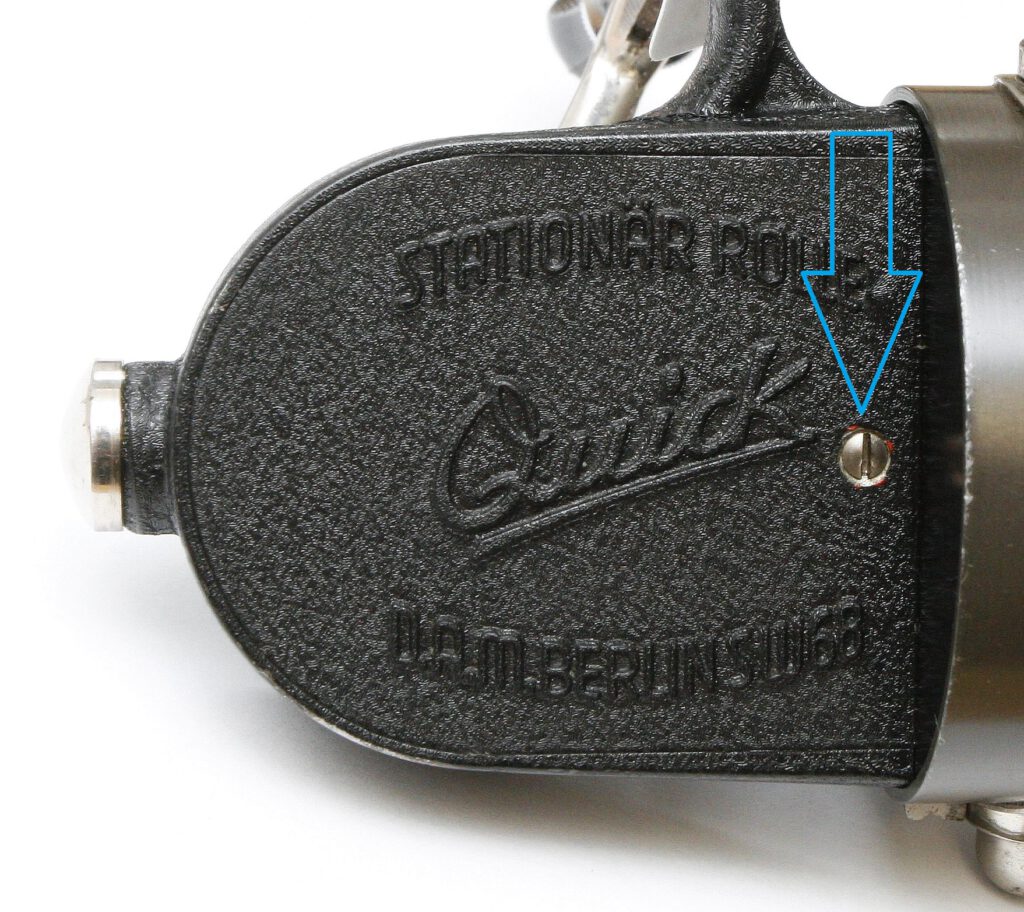
Zuerst wird die kleine Schraube im Deckel vorsichtig heraus geschraubt. Das sollte man wenn es irgendwie geht niemals im Freien machen, denn sonst ist die Gefahr groß, das die Schraube verloren geht.
Noch ein kleiner Hinweis: Zu der roten Farbmarkierung, die man noch manchmal an dieser Schraube findet! Da ja Anfang der Fünfziger Jahre, fast alle Männer in der deutschen Armee gedient hatten, hat man einfach das Farbkodierungssystem der Armee übernommen. Das bedeute “ rote Farbmarkierung“ schmieren mit Öl!
Wenn man diese Schraube heraus dreht, kann man durch hinein spritzen, von etwas dünnflüssigem Öl, die Hauptachse schmieren, dies sollte man von Zeit zu Zeit machen!
First, carefully unscrew the small screw in the lid. If at all possible, this should never be done outdoors, as there is a high risk of losing the screw.d served in the German army in the early 1950s, the army’s color-coding system was simply a
One more small point: Regarding the red paint marking that you sometimes still find on this screw! Since almost all men had served in the German army in the early 1950s, the army’s color-coding system was simply adopted. This means „red paint marking“ – lubricate with oil!
If you unscrew this screw, you can lubricate the main shaft by injecting some thin oil into it, this should be done from time to time!
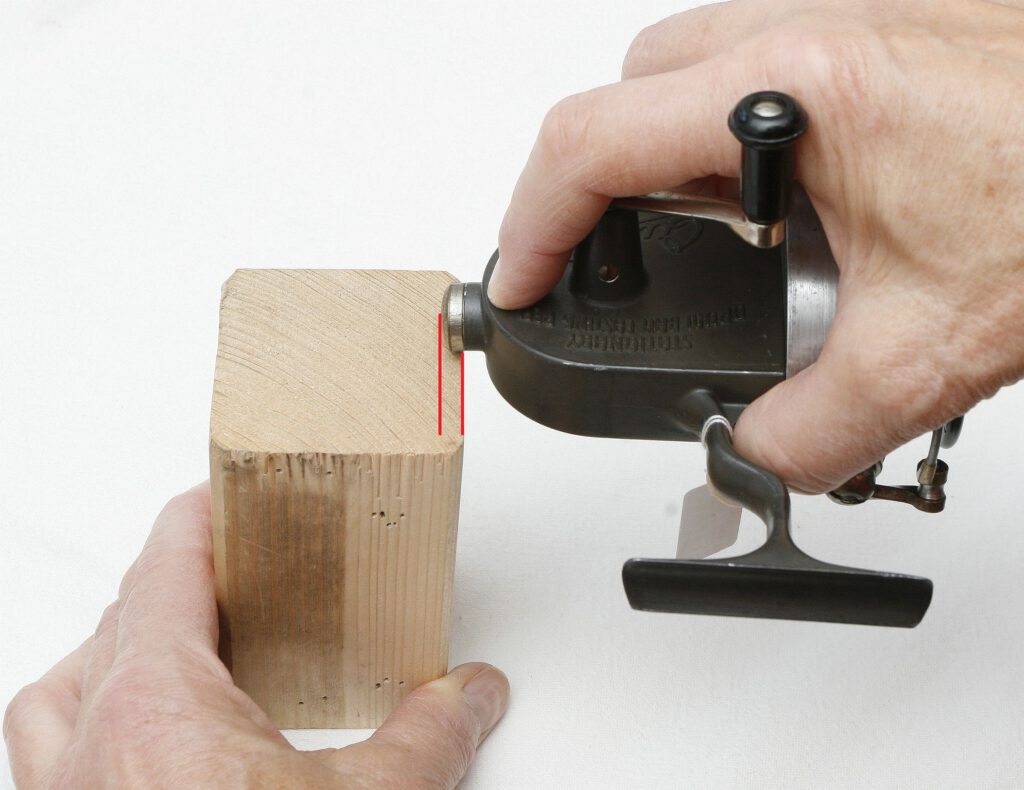
Eigentlich ist es ganz einfach den Standard Deckel schonend zu öffnen!
Man sägt sich einen Klotz aus weichem Holz, Kunstoff oder Gummi in der richtigen Größe zu. Dann legt man ein mehrfach gefaltetes Tuch auf eine Werkbank oder einen stabilen Tisch (damit der Deckel beim raus springen keine Schäden bekommt)! Darauf stellt man den Klotz und hält ihn mit einer Hand fest. Vorher hat man die Schraube, wie oben beschrieben, vorsichtig aus dem Seitendeckel heraus gedreht! (Mit einen passenden scharfen Schraubendreher).
Dann nimmt man die Rolle in die andere Hand und klopft vorsichtig mit der vernickelten Lagermutter auf den Klotz! Und unbedingt nur mit dem Überstand, denn bei den neueren Rollen so ab ca. 1954 kann sonst die Farbe abplatzen! Manchmal klemmt der Deckel etwas, dann muss man die Stärke der Schläge, vorsichtig etwas erhöhen, bis der Deckel raus fällt!
Actually, it’s quite easy to open the standard lid gently!
Saw a block of soft wood, plastic, or rubber to the correct size. Then place a folded cloth on a workbench or sturdy table (so that the lid doesn’t get damaged when it pops out). Place the block on the cloth and hold it firmly with one hand. Beforehand, carefully unscrew the screw from the side cover as described above (using a suitable sharp screwdriver).
Then take the reel in your other hand and gently tap the block with the nickel-plated bearing nut! Be sure to only tap with the protruding part, because on newer reels from around 1954 onwards, the paint can chip off otherwise! Sometimes the lid is a little stuck, in that case, you need to carefully increase the force of the taps until the lid falls off!
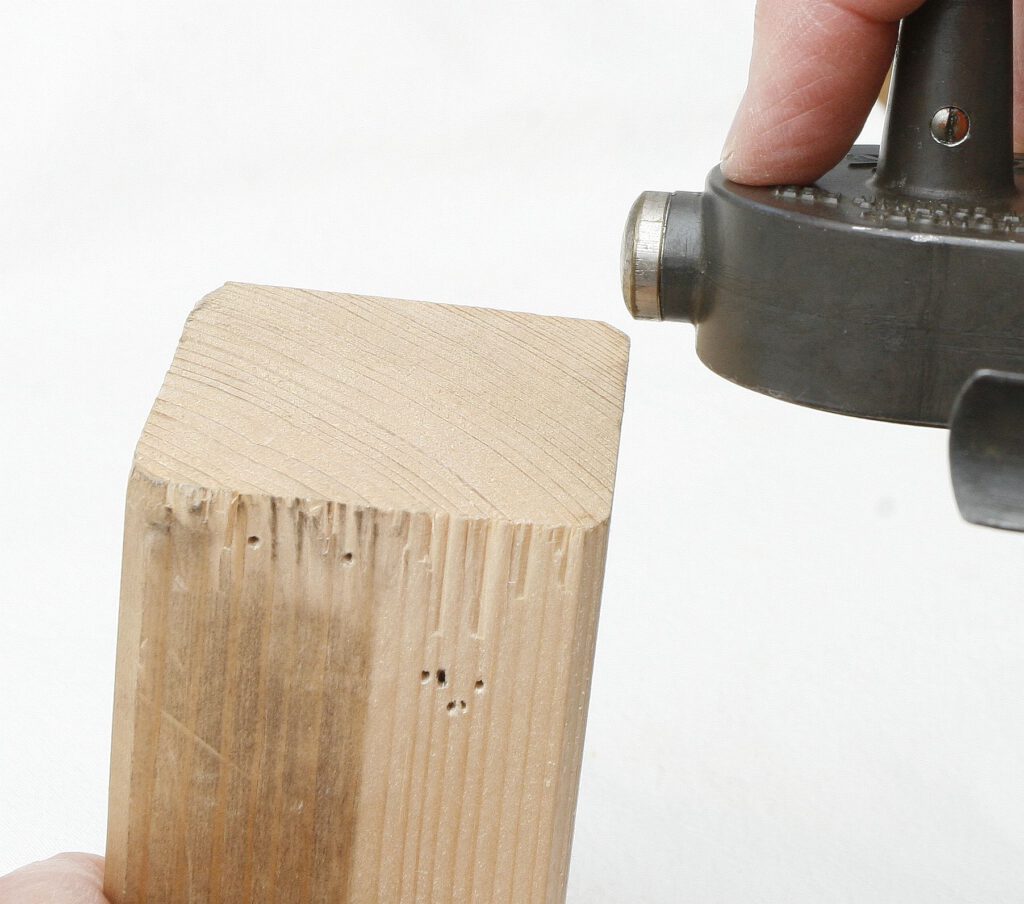
Nicht mit übertriebener Gewalt arbeiten, vorsichtige trockene Schläge! Bei den meisten Rollen reichen 1 bis 3 Schläge aus. Sollte es mal besonders schwer gehen, nicht die Geduld verlieren, der Deckel fällt dann irgend wann raus. Sollte es mal überhaupt nicht klappen? Die Rolle einfach etwas mit dem Heißluftfön vorsichtig etwas erwärmen, aber bitte nicht ausglühen oder die Farbe abbrennen, immer schön vorsichtig!
Allerdings übernehme ich keinerlei Garantie das nicht irgend welche Folgeschäden auftreten, denn das liegt immer am Geschick des Durchführenden! Ich habe auf diese Art und Weise schon ein paar Hundert Standards geöffnet! Bei mir gab es durch öffnen noch nie einen Folgeschaden! Dann wünsche ich viel Erfolg. Und bitte die Rolle anschließend nicht über fetten, davon können sie auch kaputt gehen!
Don’t use excessive force, gentle, dry taps are sufficient! One to three taps are enough for most reels. If it’s particularly difficult, don’t lose patience; the lid will eventually fall off. If it’s still not working at all, gently warm the reel slightly with a heat gun, but please don’t overheat it or burn off the paint—always be careful!
However, I offer no guarantee that no consequential damage will occur, as this always depends on the skill of the person performing the procedure! I’ve opened several hundred standard reels this way! I’ve never experienced any consequential damage from opening one! I wish you the best of luck. And please don’t over-grease the reel afterward, that can also damage it!
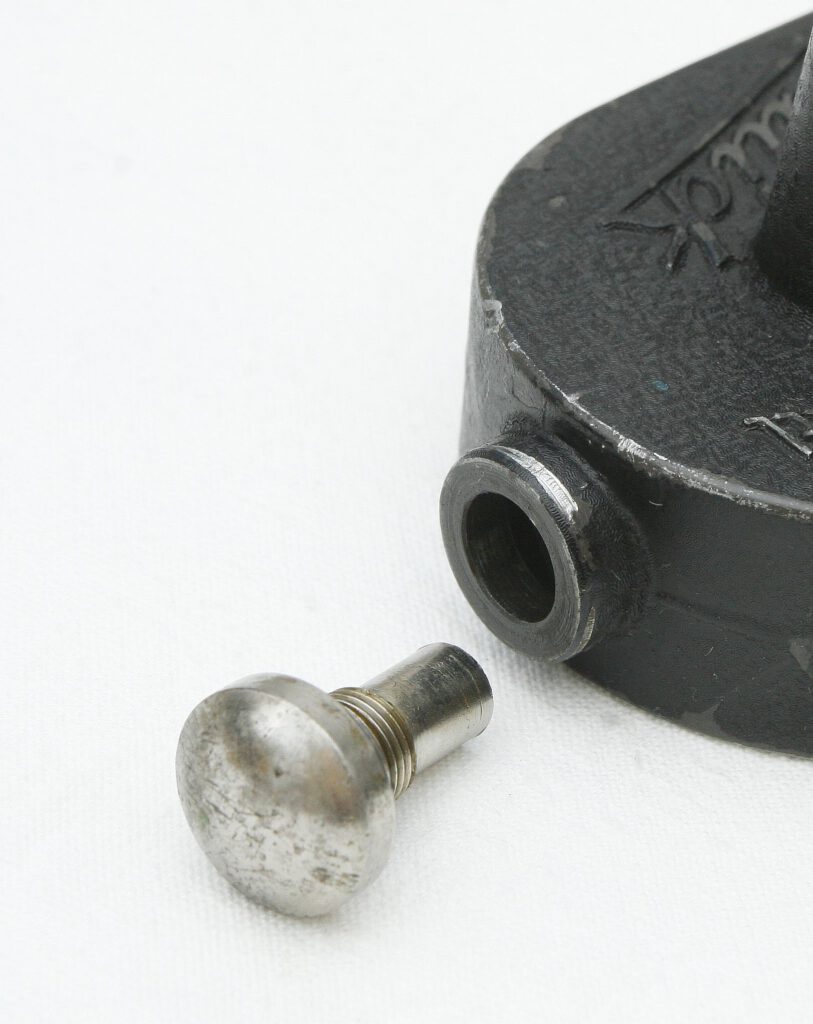
Und sollte mal die Lagerschraube fehlen? Einfach eine andere Lagerschraube reinstecken , festhalten und vorsichtig klopfen! Sollte auch diese fehlen? Kann man sich mit Hilfe einer Bohrmaschine aus einem Stück Holz oder Kunstoff ein geeignetes Rohr anfertigen (Außen 9mm) und die Bohrung für die Achse nicht vergessen (5mm) und reinstecken als Ersatz zum drauf klopfen (wie Foto 2) , bitte nicht ohne versuchen, das kann zu Folgeschäden am Antrieb führen!
Und noch eine Anmerkung die Lagerbuchsen bitte nicht mit der Wasserpumpenzange rein oder raus drehen , sonst sieht die Rolle anschließend aus, wie diese hier! Dafür braucht man 2 Spezialwerkzeuge!
Und bitte nicht zu viel an den Rollen selber machen, ohne richtige Vorkenntnisse der Feinmechanik! Ich habe das früher Beruflich gemacht, zwar nicht an Angelrollen, sondern an Flugzeugen!
And what if the bearing screw is missing? Simply insert another bearing screw, hold it in place, and tap it gently! If that one is also missing, you can use a drill to make a suitable tube (9mm outer diameter) from a piece of wood or plastic, remembering to drill a 5mm hole for the axle, and insert it as a replacement to tap into place (as in photo 2). Please do not attempt this without the tube, as it can lead to further damage to the drive system!
And one more thing: please do not use water pump pliers to screw the bearing bushings in or out, otherwise the roller will end up looking like this! You need two special tools for that!
Please don’t do too much work on the reels yourself without proper prior knowledge of precision mechanics! I used to do that professionally, not on fishing reels, but on airplanes!
Stipo
Poštovani gospodine Wenzel, nedavno sam postao vlasnik dvije role DAM Quick Standard. Tražeći informacije o njima naišao sam na Vašu stranicu pa bih Vas molio jednu informaciju, naime jedna rola ima plastičnu špulu i vijak špule što do sada nisam vidio pa me zanima dali je to original špula? inače role izgledaju kao nove i nebi ih uspio otvoriti da nisam naišao na Vaš tekst. Lijepi pozdrav iz Hrvatske !
Stipo
admin
Hier die Übersetzung ins Deutsche:
Sehr geehrter Herr Wenzel, ich bin seit Kurzem im Besitz zweier DAM Quick Standard Rollen. Bei meiner Suche nach Informationen dazu bin ich auf Ihre Website gestoßen und hätte daher eine Frage: Eine der Rollen hat eine Kunststoffspule und eine Bremsschraube, die mir bisher unbekannt war. Ich frage mich, ob es sich um die Originalspule handelt. Ansonsten sehen die Rollen wie neu aus, und ich hätte sie ohne Ihre Tipps, auf der Website, nicht öffnen können. Beste Grüße aus Kroatien!
Stipo
admin
Hallo Stipo,
Gerne kannst du mir ein paar Fotos, von den Rollen, an meine E-Mail senden!
Die Adresse ist:
d.u.wenzel@t-online.de
Viele Grüße
Uwe
Hi Stipo,
Feel free to send me some photos of the reels to my email address!
The address is:
d.u.wenzel@t-online.de
Best regards,
Uwe